RSNA President: Radiology’s future is filled with promise
In an upbeat address to radiologists attending RSNA25, Umar Mahmood, MD, describes how imaging fills compelling future needs.
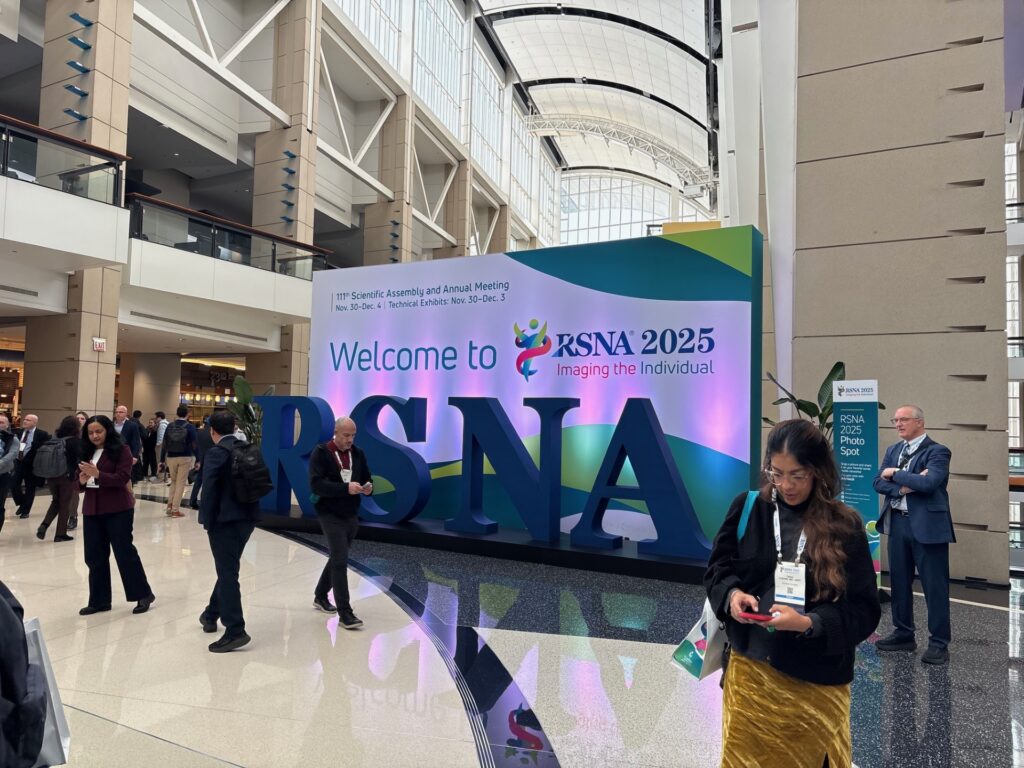
This past Sunday, Umar Mahmood, MD, the president of the Radiological Society of North America, delivered his president’s address during the opening day of RSNA25, the association’s annual meeting being held this week in Chicago.
Mahmood is chief of nuclear medicine and molecular imaging, director of the Center for Precision Imaging, associate chair for imaging sciences in the Department of Radiology at Massachusetts General Hospital and professor of radiology at Harvard Medical School in Boston.
Mahmood chose “Imaging the Individual” as the theme for his address, echoing the theme of RSNA25, and explaining that he wanted to emphasize the oneness of humanity.
“All of us in this room share a common humanity, hopes, dreams, values, traits, experiences that connect us,” he told the audience. “We are individuals; each life is distinct. This continuum from community to self shapes the theme of this year’s conference, ‘Imaging the Individual.’”
Progress is accelerating in a number of areas, Mahmood said, noting that “We are imaging people at higher resolution and faster and faster rates, and have an increasing ability to understand how genes evolve and interact. We can now diagnose each patient with higher fidelity. By tailoring our imaging to illuminate a patient’s unique characteristics, we can guide treatments to drive better outcomes. We help to heal all of us by focusing on each of us.”
And that, he emphasized, is bringing radiologists more fully into patient care delivery, and changing the value equation for radiology in healthcare.
“The expansion of our capabilities over the last 20 years, enables us to image the individual in ways never before possible. Many of our modalities — CT, MR, PET and ultrasound — have given us high-fidelity images at speeds we would never have imagined even a few years ago. We can now routinely see physiology and disease in ways we couldn’t before. MR improvements, together with systematic improvements, allow us to characterize prostate, breast and heart abnormalities with faster scans.”
Importantly, he noted, “We can now determine earlier how treatments are working. And our images contain so much information that we can perform opportunistic screening, and we now are moving into precision health. We can identify risk earlier on. This allows us to fully intervene before disease progression.
“Radiologists are not just at the center of this transformation in medicine; we are helping to create and image it,” he added.
All of this, Mahmood emphasized, is moving patient care delivery towards true precision medicine, with diagnostic imaging playing a role in helping fellow physicians to create “a manageable structure for optimized personal treatment plans,” with artificial intelligence opening new doors to diagnosis and treatment.
AI, he emphasized, is going to help “to combine all that we know about cancer biology: the EMR, tumor genetics, tumor imaging and targeted cancer drugs.” And combining those capabilities, he emphasized, will lead to “detailed, personalized treatment plans.”
Further, “Imaging breakthroughs are transforming neurological, cardiovascular and autoimmune disease treatments. All radiology subspecialties are fundamental to our patients,” he emphasized.
“We are so lucky to be living now,” in a time of tremendous medical and technological advances,” he concluded. “We continue to reinvent our field.”
Mark Hagland is a freelance writer/editor with extensive experience covering healthcare and information technology.