Getting off the dime to worry about healthcare resource consumption
With the COVID-19 pandemic a distant memory, concerns should grow about whether we’ll have the wherewithal for the next crisis.
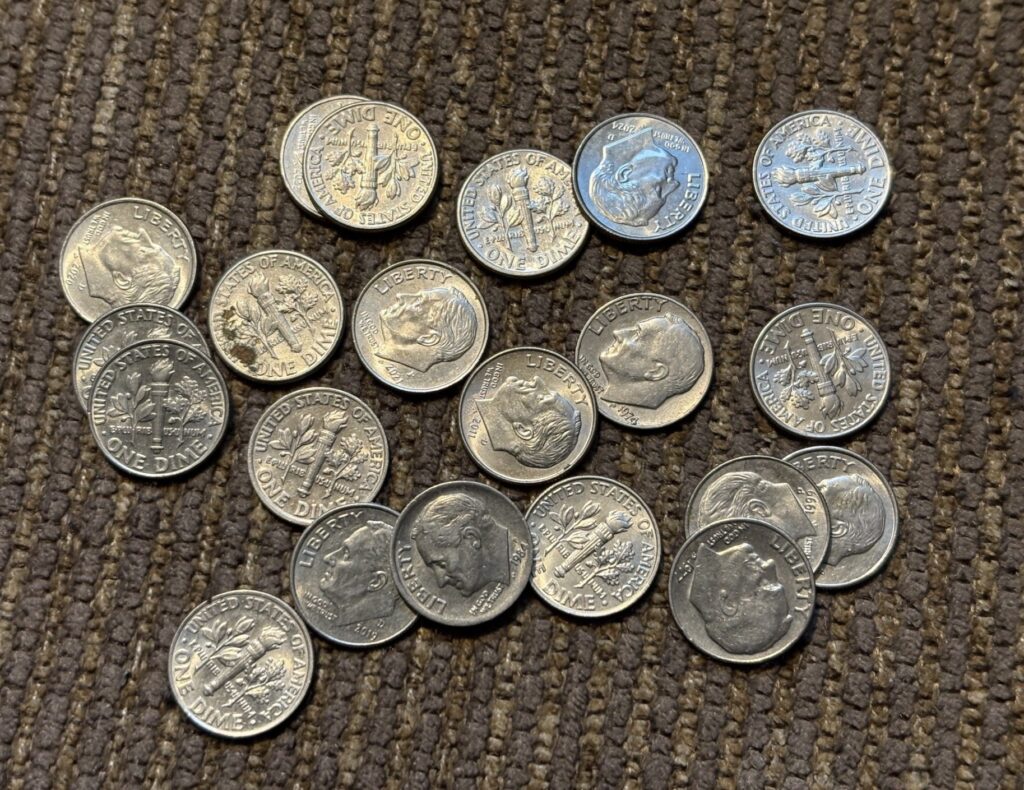
I recently was at my grade school in Chicago for a career fair for sixth through eighth grade students. These kids are wising up – very few takers for careers in journalism.
Afterward, it was fun to get nostalgic, tour the old neighborhood and reminisce about my post-school choices as a young consumer (assuming I had a dime in my pocket from doing my weekly chores).
Here were the options – two packs of baseball cards at Guardian Pharmacy; a roll of Necco Wafers and two pretzel sticks at Wallerman’s, a small storefront grocery; or a 10-cent bottle of red crème soda at the gas station next door. Or save the dime for another day.
Judging from my baseball card collection, I apparently frequented the pharmacy a lot. But there was a valuable lesson in these regular deliberations. The dime spent at one merchant was not available for future use.
Resource awareness
It may seem like an obvious lesson, but it’s one that I’ve re-learned countless times. As purchases grow in dollar amount, the same truism exists. No amount of marketing can influence whether that dime is spent or remains in your pocket. Once spent, it’s gone.
But glory be to sophisticated marketing, we’ve all gotten used to spending dimes we don’t have. Whether it’s to buy a house, a car, a Frappuccino or a fancy meal, we’ve become inured to the worries about whether we can afford anything. Not having dimes in the pocket has become inconsequential.
Until it’s not.
I will take a hard-right turn now and not talk about consumerism or the evils of borrowing or buying on credit. Heck, we just spent $1,500 on a washer and dryer last night, and I whipped out the plastic without batting an eye. Anyone want to buy my baseball cards?
Rather, my concern is the healthcare resources that we are likely to squander because of poor planning or short memories. As a country, as a globe, we only have a limited number of healthcare “dimes” that we are blithely consuming. Once gone, they are consumed. The dime spent early and unnecessarily is not available when needed down the road.
Resource consumption in healthcare tends to be invisible and not always measured in units that we typically quantify. Yes, we all see the dollars flowing around and perhaps the pharmaceuticals or medical devices consumed. Dollars are the lingua franca to which we ascribe the most value and pay the most attention (if not all attention).
I worry more about the resources that we burn through that aren’t measured in dollars. The clinicians burning out because they can’t handle the workload. The necessary preventive services that “aren’t worth it” but have the potential to deflect major spending down the road. The technology that costs a fortune but is underutilized. The students that never consider a career in healthcare because they’re transfixed by sexier careers (and more well-paid) in other fields.
The next catastrophe
The time when the bills come due is when unexpected loads are placed on the healthcare system.
You’d think this would have been burned into our psyches by the COVID-19 pandemic. Only six years ago, we were hiding in our houses, washing our groceries and scared out of our minds. And we watched 1.2 million American die, as a conservative count, over these past six years. One out of every 300 of us.
The long-term effects of the pandemic on the healthcare system, and more importantly, on clinical and support staff, have been just as devastating. Deaths of thousands of clinicians from treating COVID patients and acquiring the infection themselves. Burnout. Folks transitioning out of clinical care to do anything but that, after spending years in training and gaining experience at the bedside.
But the pandemic seems like a distant memory, and we like to tell ourselves that it would never happen again. We explain away threats like Ebola, the hantavirus, bird flu or dengue, saying their circumstances are different, they’re not as easily transmissible, and we’re older and wiser.
Meanwhile, we’re spending our globe’s healthcare “dimes.” They may not exactly be our dimes, but we’re inefficiently burning through global healthcare resources and not seeming to care about it.
Those dimes we’re wasting in other parts of the world now won’t be there the next time they’re needed. And the protection that the U.S. had bought itself by providing aid and medical resources abroad is significantly diminished because we’re now hoarding our dimes and allowing dangerous diseases to get a running start.
The importance of proactivity
The current Ebola outbreak in the Congo is a growing crisis, exacerbated by multiple factors. And as we learned from COVID, infectious diseases are not bound by borders or distance. Disease causes can mutate, infection vectors can change, so however safe we may feel now can change in an instant.
All the while, healthcare organizations (and their clinicians) quake. Are we really ready for Ebola, hantavirus or the next as-yet unknown epidemic? We seem to be clutching our lucky dime and hoping real hard here. With massive staff reductions that have occurred at the Centers for the Disease Control and Prevention over the last 18 months, we seem to be flying blind.
I had to chuckle sadly at this recent news story noting that the CDC is looking for volunteers from its staff to help with Ebola health screenings through airport health surveillance.
A story from Reuters reports that CDC acting director Jay Bhattacharya sent an email indicating “that the agency had activated a Level 2 emergency response on May 18 to an outbreak of the Bundibugyo strain of the Ebola virus in the Democratic Republic of the Congo and Uganda, and was expanding recruitment beyond its usual emergency responder pool.”
Level 2? That sounds ominous (and I wasn’t even aware we were at Level 1). Perhaps it’s a wake-up call. I pray we will not continue to be dime-wise and resource-foolish.
Fred Bazzoli is the Editor in Chief of Health Data Management.