Digital transformation is the path to health system transformation
Lessons from the inaugural Digi-Health Lab Symposium, Middlesex University Dubai offer critical guidance to healthcare executives.
Healthcare continues to invest heavily in technology. The more difficult work is making sure those investments translate into better decisions, better care, and better outcomes.
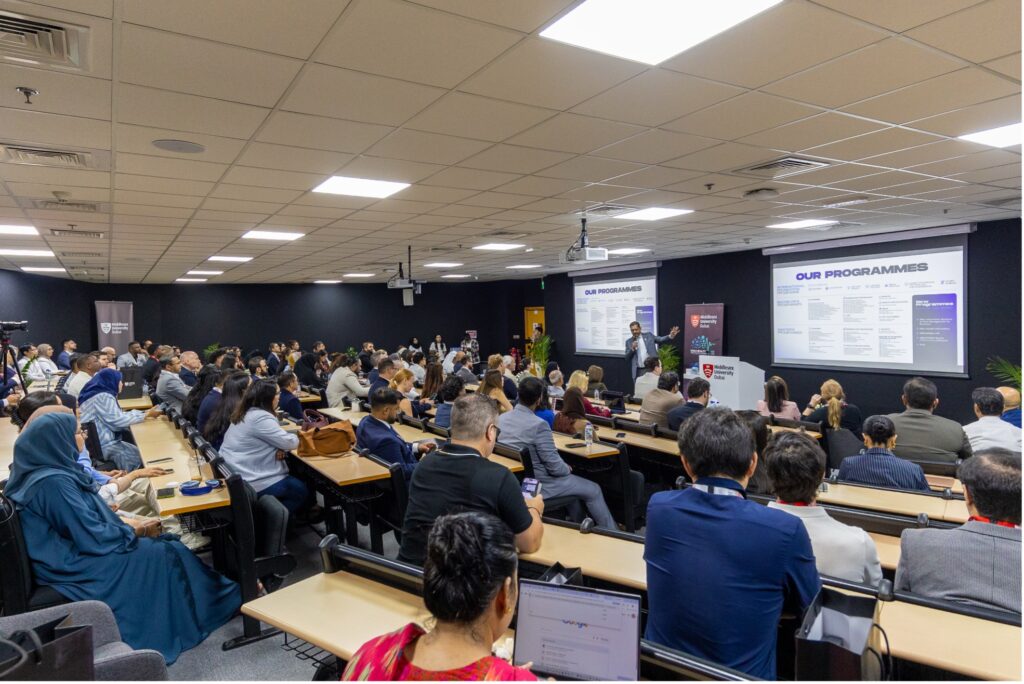
That was one of my reflections following the inaugural Digi-Health Lab Symposium at Middlesex University Dubai on September 10. The symposium brought together leaders from healthcare, government, academia and industry to discuss how artificial intelligence, connected technologies and health data can support the continued shift from reactive care toward prevention, earlier intervention and more personalized care.
The timing was particularly relevant. In May, the UAE Cabinet approved the National Policy for Advancing Digital Healthcare Services and Artificial Intelligence in the Healthcare Sector, reinforcing the country's direction toward a more connected and digitally enabled healthcare system.
For healthcare leaders, adopting technology is only one part of that transformation. We also must create the governance, clinical processes, data infrastructure, trust and accountability needed to use it well.
Connecting research, foresight and care
The Digi-Health Lab sits within Middlesex University Dubai's Centre of Excellence for Foresight and Emerging Technologies (CEFET). Its work brings healthcare, artificial intelligence, data science, informatics and human-centered innovation into the same research environment, with a focus on prevention, earlier insight, remote care, accessibility and practical translation into healthcare settings.
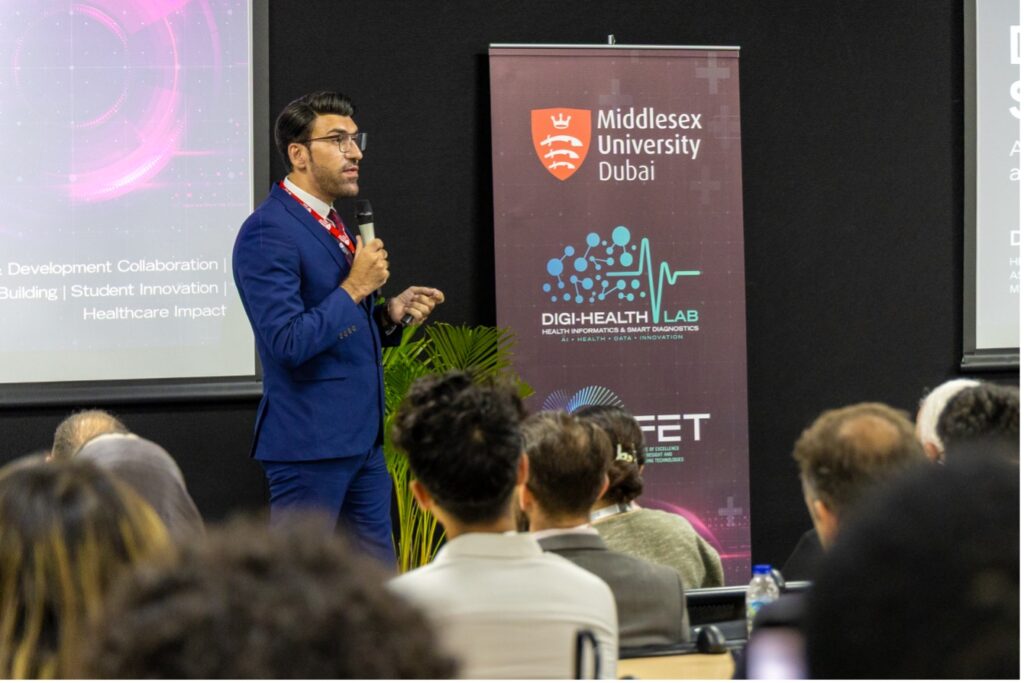
“As AI and digital health move from pilots to scale, the focus must shift from what technology can do to what healthcare actually needs," says Dr. Ikram Rehman, head and founder of the Digi-Health Lab. "Leaders need to get three things right: clinical value, trust and integration into how care is delivered. Get that right, and technology can help us move from reactive care to earlier intervention, more personalized support and healthcare that is increasingly at people’s fingertips. That is when innovation becomes impact.”
“Universities have an important role in shaping the future of healthcare, not simply by studying emerging technologies, but by helping determine how they can create meaningful value for society," adds professor Fehmida Hussain, head of CEFET. "Through CEFET, we bring academia, industry and policy closer together, combining research with foresight to anticipate what comes next and help translate innovation into impact. This is how we can contribute to the UAE’s ambition for a more innovative, inclusive and connected healthcare system.”
That combination of research and foresight matters. Health systems are making decisions today about technologies, data architectures, workforce capabilities and governance models that will shape care for years. Universities can provide an important neutral space to test ideas, bring different disciplines together and examine not only what is technically possible, but what is useful, inclusive, and sustainable.
The criticality of human-centered design
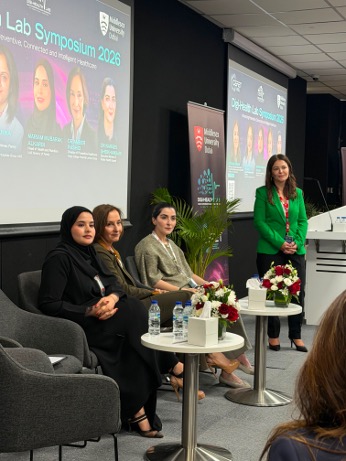
Dr. Engie Bashir, a core member of the Digi-Health Lab, brings expertise in human-computer interaction, inclusive digital health, user experience and health technology design. Her perspective adds an important dimension to the conversation because successful digital health is not only a question of technical performance. It is also about whether people can use, trust and benefit from what we build.
“The future of preventive digital health must be human-centered," Dr. Bashir says. "That means designing with people, not simply for them — listening to patients, families and clinicians, understanding their everyday experiences, and continuously testing and refining solutions with them. Technology creates meaningful impact when people can trust it, access it and see its value in their everyday lives.”
I agree with that emphasis. Accessibility, health literacy, digital literacy, workflow and user experience should not be addressed after a solution has already been developed. They belong in the design process from the beginning. This is especially important as healthcare moves further into homes, mobile devices, wearables, and other settings where patients and families become more active participants in how health information is generated and used.
Health system readiness for transformation
The broader symposium discussion reinforced the same point from different angles. Technology can identify risk, generate an alert or provide a new stream of information, but the health system still has to know what to do with it.
Dr. Narges Sheikhansari emphasized during the opening panel that technology can only serve at the level of the system for which it was built. She also challenged us to design for adaptability rather than permanence, recognizing that what we put in place today needs to remain relevant as healthcare and technology continue to change.
Remote monitoring may identify deterioration earlier, but there still needs to be a clinical pathway for acting on that information. Predictive analytics may identify risk, but clinicians need to understand how the information should inform care. AI can generate insights from increasingly complex datasets, but those insights remain dependent on data quality, governance, clinical context and accountability.

Data must inform the decision
Dr. Amber Rashid described another important change taking place in healthcare. There is a growing movement from periodic snapshots of a patient's health toward increasingly continuous information generated through wearables and connected technologies.
Her larger point was that collecting data is not enough. That information must be translated into decisions that improve care and prevent avoidable deterioration.
That distinction is important because much of my career has focused on healthcare data, analytics and governance. More data does not automatically produce better care. The value comes when information is reliable, clinically relevant, available at the right time and connected to a decision or intervention.
It should also influence how we define digital maturity. The number of AI solutions deployed tells us very little on its own. The question is whether those solutions are improving clinical decisions, patient safety, access, workforce experience, utilization or outcomes, and whether we have the data to demonstrate that improvement.
The impact of student innovation

Some of the clearest examples of human-centered innovation came from the student showcase.
Mega Glasses explored an AI-enabled wearable assistive system for people with visual impairment. AEGIS, the Autonomous Elderly Guardian & Intelligent Sensing system, uses Wi-Fi sensing and mmWave radar to support continuous monitoring without cameras and without requiring the individual to wear a device.
SignBridge, developed by Maleesha Chamodi Kottage Rajapaksha, used an AI model to recognize American Sign Language fingerspelling and convert it into text, addressing communication barriers for deaf and hard-of-hearing patients in emergency care (Middlesex University Dubai, 2026a).
These projects did not begin with technology for its own sake. Each started with a recognizable human problem: greater independence for someone with visual impairment, safer and less intrusive monitoring for an older adult or better communication for a deaf or hard-of-hearing patient seeking emergency care.
As healthcare becomes more digital, we have to be deliberate about who benefits. Older adults, people with disabilities, people with different levels of health and digital literacy, and communities with varying levels of access cannot become an afterthought in digital health design. The students demonstrated what can happen when the person and the problem come first.
Connecting the pieces
Across nearly two decades working in healthcare analytics, data governance and health system transformation in the United States and the Middle East, I have seen organizations make significant investments in technology without putting the same level of attention into governance, implementation and adoption.
Technology cannot connect strategy, clinical practice, data, operations and patient experience on its own. Leadership must do that.
In practice, that means involving clinicians and users early, establishing governance before scaling, understanding how a technology fits into existing workflows, defining accountability, protecting trust and agreeing on the outcomes we expect to improve.
The Digi-Health Lab Symposium provided a useful example of why these conversations need different voices at the table. Research and foresight, clinical expertise, human-centered design, health data, policy, industry and student innovation each contributed a different part of the picture.
From innovation to impact
Artificial intelligence and digital health will continue to change rapidly, and healthcare organizations will continue to adopt new technologies. The responsibility of leaders is to make sure the systems surrounding those technologies are equally ready to evolve.
The sequence matters. We need to understand the problem, the people affected by it and the outcome that needs to change before deciding where technology can add value. From there, governance, integration, accessibility, trust and measurement determine whether an innovation becomes part of better care or remains an isolated pilot.
The Digi-Health Lab Symposium demonstrated that the technology is advancing quickly. The challenge to leadership is to make sure health systems advance with it.
Julia Rehman, DHA, FACHE, FACHDM, is founder and chief operating officer of Kota Kompany LLC.